

Learn how to create an effective digital marketing strategy for small businesses. Discover practical steps to reach your target audience, improve online visibility, generate leads, and grow your business through SEO, social media, PPC, and content marketing.
Introduction
Growing a small business in today's competitive online environment requires more than creating a website or posting regularly on social media. Businesses need a clear plan to reach their target audience, build brand awareness, generate leads, and increase sales.
A Digital Marketing Strategy for Small Business provides a structured approach to achieving these goals. It helps business owners select suitable marketing channels, manage their budgets, and focus on activities that support business growth.
For small businesses in Pakistan, digital marketing creates opportunities to reach customers across different cities, promote products and services, and compete in online markets.
In this guide, you will learn how to develop a digital marketing strategy, choose suitable marketing channels, set marketing goals, and measure your performance.
Quick Answer: What is the best digital marketing strategy for a small business?
The best strategy combines suitable marketing channels according to the business's goals, target audience, and budget. Small businesses can use SEO, social media, content marketing, and paid advertising to improve online visibility and attract potential customers.
What Is a Digital Marketing Strategy?
A digital marketing strategy is a plan that explains how a business will use online channels to attract customers and achieve its marketing objectives.
It may include search engine optimization (SEO), social media marketing, Google Ads, content marketing, email marketing, and website optimization.
For example, a small clothing business can use SEO to attract people searching for clothing online, Instagram to showcase products, and paid advertisements to reach potential buyers.
An effective Online Marketing Strategy connects these activities so they work towards the same business objectives rather than operating as unrelated campaigns.
Why Do Small Businesses Need a Digital Marketing Strategy?
A clear marketing plan helps small businesses use their available resources more effectively. Without one, businesses may spend money on advertisements or content that does not reach their intended audience.
An effective strategy can help businesses:
- Increase online visibility: Reach potential customers through search engines and digital platforms.
- Build brand awareness: Communicate business values and offerings through consistent content.
- Generate leads: Attract potential customers through search, advertisements, and landing pages.
- Reach relevant audiences: Use audience targeting and keyword research to connect with potential buyers.
- Measure performance: Understand which marketing activities contribute to business objectives.
The best approach depends on the business's industry, target customers, competition, and budget.
7 Steps to Create a Digital Marketing Strategy for Small Business
1. Define Your Business Goals
Start by deciding what you want your digital marketing activities to achieve.
Common business goals include:
- Increasing website traffic.
- Generating qualified leads.
- Improving online sales.
- Building brand awareness.
- Growing social media engagement.
- Reaching customers in new markets.
Make your goals specific and measurable. For example, instead of simply aiming for more website visitors, set a realistic traffic target and a timeframe.
Your marketing activities should support these objectives rather than operate without a clear direction.
2. Identify Your Target Audience
Understanding your audience helps you create relevant marketing messages and select suitable platforms.
Consider these questions:
- Who are your ideal customers?
- What problems do they want to solve?
- Which products or services are they searching for?
- Where do they spend time online?
- What influences their purchasing decisions?
For example, a clothing store may target online shoppers interested in fashion, while a B2B company may focus on business owners and decision-makers.
For businesses targeting customers in Pakistan, consider relevant cities, language preferences, customer needs, and purchasing behavior when planning campaigns.
3. Build an SEO-Friendly Website
Your website is an important part of your digital marketing strategy. It introduces your business, explains your offerings, and provides visitors with ways to contact you or make a purchase.
A business website should include:
- Clear product and service information.
- Simple navigation and mobile-friendly design.
- Relevant page titles and headings.
- Fast-loading pages.
- Clear contact details and calls to action.
- Secure HTTPS connection.
- Relevant internal links.
Search engine optimization can improve your website's visibility for relevant search queries. Focus on keyword research, technical SEO, useful content, and on-page optimization.
Businesses interested in improving their online presence can explore Catcore Solutions' digital marketing services.
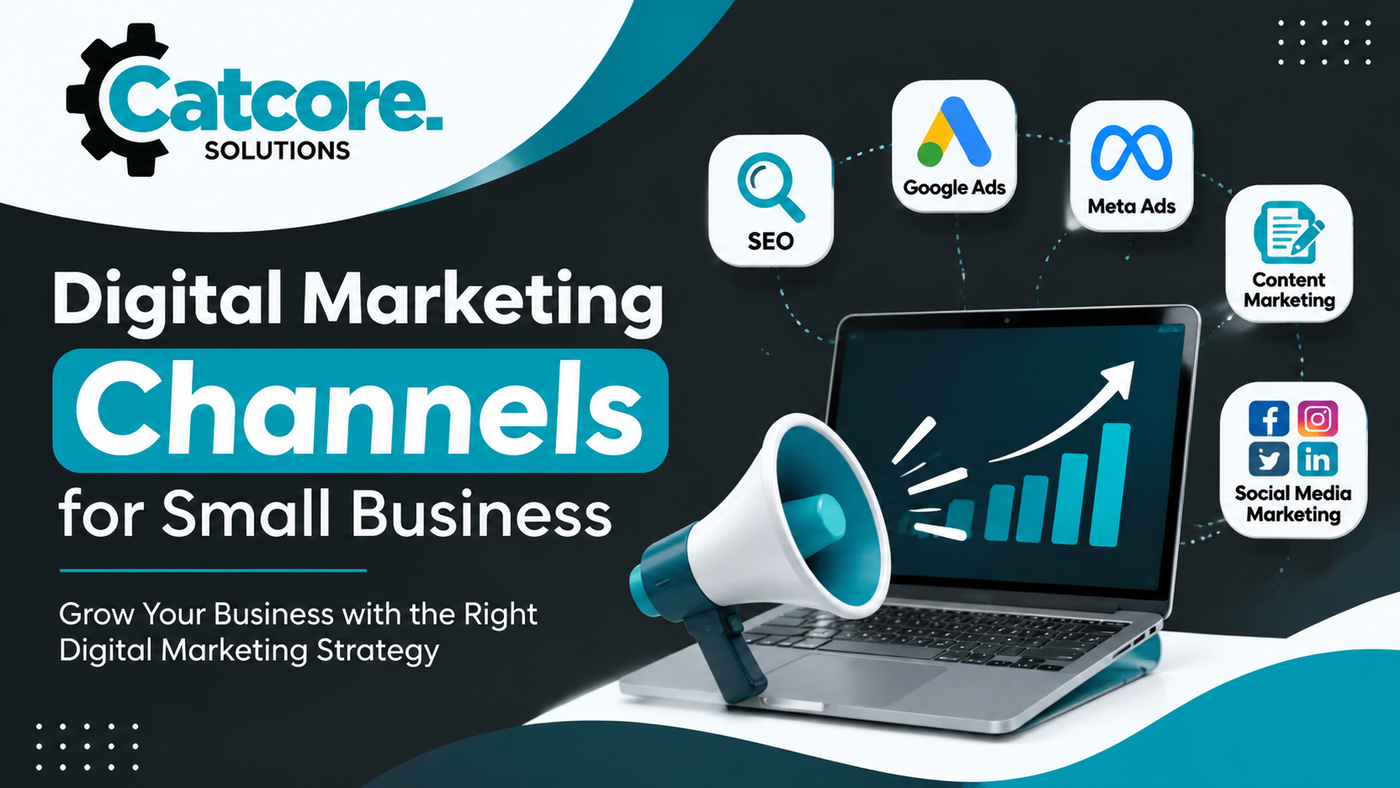
4. Choose the Right Digital Marketing Channels
Not every platform is suitable for every business. Select channels according to your audience, goals, and available resources.
Search Engine Optimization (SEO)
SEO improves a website's ability to appear in relevant organic search results. It can help businesses attract visitors who are actively searching for their products or services.
Social Media Marketing
Platforms such as Facebook, Instagram, and LinkedIn allow businesses to share updates, publish useful content, and engage with potential customers.
Google Ads and PPC
Paid search campaigns help businesses reach people searching for relevant products and services. Effective campaigns require suitable keywords, relevant landing pages, and conversion tracking.
Meta Advertising
Facebook and Instagram advertising can help businesses promote products, increase awareness, and attract potential leads through targeted campaigns.
Content Marketing
Blogs, guides, videos, and social media content help answer customer questions and explain the value of your products or services.
A business does not need to use every channel. Start with the platforms that best match your customers and marketing objectives.
5. Create Useful and Relevant Content
Content helps businesses communicate with their audience, answer questions, and build trust.
Before publishing, research the topics and questions your potential customers are interested in.
Your content plan may include:
- Educational blog articles.
- Product and service guides.
- Frequently asked questions.
- Product demonstrations.
- Social media posts.
- Short-form videos.
- Genuine customer stories and project examples.
For example, a small web development company can publish guides about website design, website maintenance, and choosing a suitable website platform.
Use descriptive headings, short paragraphs, practical examples, and clear answers. This makes your content easier to understand for readers, search engines, and AI-powered answer systems.
6. Set a Realistic Marketing Budget
A successful Business Growth Strategy should consider how much a business can reasonably invest in marketing.
Your budget may include:
- SEO and website optimization.
- Paid advertising expenditure.
- Social media management.
- Content writing and creative production.
- Website development and maintenance.
- Analytics and marketing tools.
Keep agency fees separate from advertising expenditure so you can understand how your marketing budget is being used.
Small businesses can start with a few relevant activities, review their performance, and expand their marketing efforts as their requirements grow.
7. Track Results and Improve Your Strategy
Digital marketing requires regular monitoring. Measuring performance helps businesses identify effective activities and areas that need improvement.
Important metrics include:
Metric
What It Measures
Organic Traffic
Visitors arriving through search engines
Click-Through Rate (CTR)
Percentage of impressions that generate clicks
Conversion Rate
Percentage of visitors completing a desired action
Cost Per Lead (CPL)
Cost of generating a potential lead
Engagement Rate
Audience interactions with content
Return on Ad Spend (ROAS)
Revenue attributed to advertising compared with advertising spend
Google Analytics 4 can help measure website activity and conversions, while Google Search Console provides information about search performance and indexing.
Use these insights to improve your content, refine advertising campaigns, and make informed marketing decisions.
Common Digital Marketing Mistakes Small Businesses Should Avoid
Even businesses with a marketing plan can make mistakes that affect their results.
Avoid these common problems:
- Targeting everyone: Trying to reach too many audiences can make campaigns less relevant.
- Ignoring SEO: Depending entirely on paid advertising may limit long-term organic visibility.
- Posting without a plan: Random social media updates may not support clear business objectives.
- Using identical content everywhere: Different platforms have different audience expectations.
- Ignoring website experience: Slow pages and confusing navigation can discourage visitors.
- Not measuring performance: Without tracking, it becomes difficult to identify which activities are effective.
A consistent and data-informed approach helps businesses make better marketing decisions.
How Can a Digital Marketing Agency Help Small Businesses?
Managing SEO, advertising, content, social media, and website optimization can become challenging for business owners with limited time or in-house resources.
A professional agency can help businesses plan campaigns, select suitable marketing channels, develop content, manage advertisements, and monitor performance.
When comparing agencies, review their services, portfolio, communication, reporting process, and understanding of your business requirements.
Businesses looking for a Digital Marketing Agency Pakistan can explore Catcore Solutions to learn about its digital marketing, creative, and technology capabilities.
You can also review Catcore Solutions' previous projects to see examples of its work across different industries.
Frequently Asked Questions
1. What is the best digital marketing strategy for a small business?
The best strategy depends on the business's target audience, objectives, competition, and budget. A combination of SEO, content marketing, social media, and paid advertising may be suitable for different business requirements.
2. How can small businesses start digital marketing?
Start by defining business goals, identifying your target audience, creating a professional website, researching relevant keywords, and selecting suitable marketing channels. Begin with manageable activities and measure their performance.
3. Is digital marketing affordable for small businesses?
Yes. Digital marketing activities can be adjusted to different budgets. Businesses can begin with organic marketing activities such as SEO and content creation, then introduce paid campaigns according to their requirements.
4. How long does digital marketing take to show results?
The timeframe depends on the marketing channel and campaign objectives. Paid advertising can attract traffic shortly after launch, while SEO generally requires consistent work over a longer period. Results also depend on competition, website quality, and budget.
5. Which digital marketing channels are best for small businesses?
SEO, Google Ads, Meta Ads, social media marketing, and content marketing are common options. The most suitable channels depend on where potential customers spend time and how they search for products or services.
6. Why is a digital marketing plan important for business growth?
A digital marketing plan provides direction, helps prioritize resources, identifies target audiences, and establishes ways to measure performance. It keeps marketing activities organized and aligned with business objectives.
Conclusion
Building a strong online presence requires planning, consistency, and continuous improvement. A well-defined Digital Marketing Strategy for Small Business helps companies understand their audience, select relevant marketing channels, create useful content, and measure progress.
Rather than trying every available platform, focus on activities that support your business goals and provide value to potential customers.
With the right combination of SEO, paid advertising, social media, and content marketing, small businesses can improve their online visibility and create opportunities for sustainable growth.
Ready to improve your online presence? Contact Catcore Solutions to discuss your business requirements and explore suitable digital marketing services.